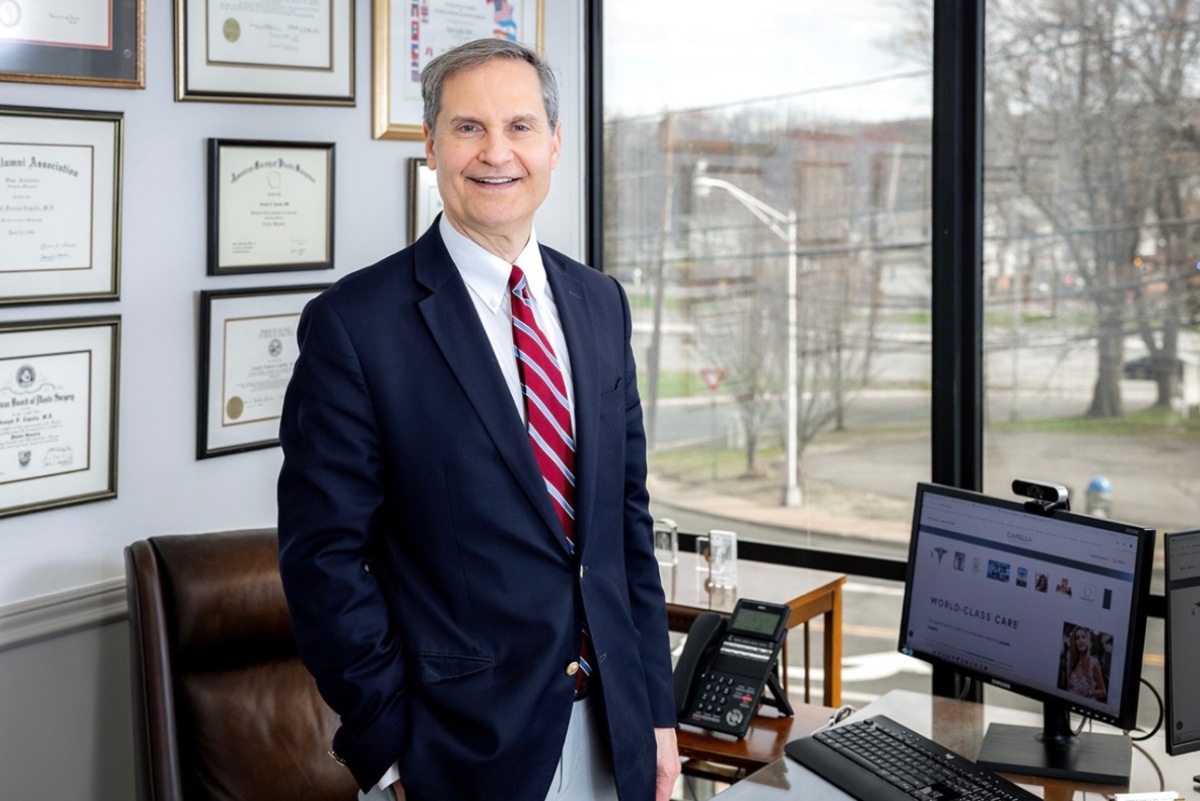















I began performing body contouring surgery on massive weight loss patients before most plastic surgeons recognized it as a subspecialty. Over the past 25 years and more than 15,000 procedures, including the largest published series of arm lifts, body lifts, and thigh lifts in the world, I have developed a systematic approach to planning these transformations that maximizes safety, minimizes recovery time, and produces the most complete, proportional results. What follows is the roadmap we use with every post-Ozempic patient who comes to our practice in New Jersey, from across the United States, and from around the world.
GLP-1 medications such as Ozempic have opened the door to remarkable weight loss for many people who previously felt stuck. After that weight loss, a new problem often shows up: loose, deflated skin, areas that feel “empty,” and others that still feel disproportionately full. Plastic surgery after Ozempic weight loss is about turning that hard-earned loss into a balanced, natural-looking shape, and doing it in a safe, predictable way.
This article walks you through the same planning process we use every day: when to consider surgery, how we evaluate each area, why the order of procedures matters, and what kind of timeline to expect from first stability to final results. Whether you live near our New Jersey office or across an ocean, the principles are identical, and the roadmap can begin with a remote consultation.
For plastic surgery after Ozempic weight loss, weight stability is the first non-negotiable. Stable weight means your scale is not still dropping or bouncing significantly. For most people, that means at least 3 to 6 months at roughly the same weight. For very large losses, we prefer 6 to 12 months of stability.
There are clear clinical reasons for this standard. When your weight is still changing, your tissues are changing too. Stability allows us to:
If surgery happens while you are still losing, several problems can show up later. More weight loss can lead to recurrent laxity, flattened or stretched areas around scars, and contours that no longer match your new frame. That can chip away at both the aesthetic result and the emotional payoff of your investment.
Stability, however, does not mean you should wait to seek expert advice. The best time to have an initial consultation is often during the late stages of your weight loss, when you are slowing down and can see your approximate endpoint. At that point, we can:
You continue working on stability while we are preparing a thoughtful plan.
Every post-Ozempic assessment starts with a head-to-toe review of specific anatomic zones. We look at the abdomen, flanks, outer and inner thighs, buttocks, lower and upper back, breasts, arms, face, and neck. In each area we evaluate:
Skin quality is another major factor. After GLP-1 related weight loss, skin is often thinner and less elastic. We assess how well it “snaps back” when lifted, how much support it can provide over tightened areas, and whether strategic fat transfer might give a better contour than removing more skin alone.
Under the surface, we consider muscle wall integrity, especially in the abdomen, and inspect any prior scars, including from bariatric or abdominal surgery. These can influence where we place incisions, how we shape the waist, and what is safest for your internal anatomy.
Equally important is your medical background. We review:
Your own priorities shape the roadmap as much as the clinical evaluation. Some patients care most about how they look in clothing, others focus on arms, breasts, or the neck in social situations. We combine those goals with our structured system to create an individualized, staged plan.
For comprehensive plastic surgery after Ozempic weight loss, there is usually a most logical and safest order. We typically recommend a three-stage sequence, with optional additions woven in based on your needs.
Stage 1, Lower Body: We usually begin with a circumferential lower body lift. This procedure addresses the largest “zone” in one stage: abdomen, hips, outer thighs (and inner thighs to some degree), lower back, and buttocks. Extra skin is removed all the way around, the waist is shaped, and the buttocks are lifted. The lower body lift is a three-hour procedure in Dr. Capella’s practice. He has personally performed over 2500 lower body lifts.
Stage 2, Upper Body: Once healing from Stage 1 is well underway, we move to the upper body.
This stage commonly includes an arm lift (brachioplasty) and a breast lift, with or without augmentation, and removal of the excess skin along the side of the breasts and below the armpit or what is commonly referred to as the “side boob”. The interval between stages is typically around 3 to 4 months so your strength, mobility, and internal healing are established.
For patients in good health and who are at or near a normal BMI, the lower and upper body lift can be performed together. This procedure is a six-hour case in Dr. Capella’s practice. Dr. Capella has personally performed over 400 of this specific combination of lower and upper body lifts.
Stage 3, Face and Neck: After the body has been reshaped, we address the face and neck so they match the new figure. This can include facelift, neck lift, and fat transfer to restore youthful volume to key areas. Often, fat harvested during earlier stages is prepared and used for this purpose, creating a more harmonious overall result.
Optional procedures are fitted into this framework. A medial thigh lift, bra line back lift, or additional contouring may be added either to Stage 1 or Stage 2, or planned as a short additional stage, depending on safety considerations and your priorities.
This order is typically preferred because it stabilizes the body’s core first, provides the greatest overall shape change early on, reduces overlap in recovery zones, and allows us to manage anesthesia time and surgical stress as safely as possible.
Patients who have lost weight with Ozempic or other GLP-1 medications often differ from traditional bariatric patients. They frequently have less residual subcutaneous fat and a more “deflated” appearance, especially in the trunk and arms. At the same time, they may retain pockets of fullness around the hips, outer thighs, or upper back.
Thinner tissues change how we plan and execute surgery. Incision placement, skin tension, and the amount of tissue we remove must be carefully balanced to avoid an over-resected, flat look. Fat redistribution becomes especially important, since even small amounts of strategically placed fat can create more natural curves.
There are also anesthesia considerations. GLP-1 medications can affect gastric emptying, which is relevant for safe anesthesia planning. We coordinate with anesthesia providers on medication management and fasting protocols, and we take your specific medication history into account when scheduling and preparing for surgery.
These nuances are why experience in massive weight loss surgery, not just general cosmetic procedures, matters. The patterns, risks, and aesthetic goals are different enough that a systematic, long-term perspective is valuable.
Because we see patients from across the country and internationally, remote consultation is a core part of our process. It typically begins with a detailed health questionnaire, including your GLP-1 history, weight loss course, and current medications. We then request standardized photos from several angles, in consistent lighting and simple clothing or undergarments that show the areas of concern.
Using this information, we outline a staged treatment plan. This includes which procedures we recommend, how we would group them into stages, estimated intervals between stages, and general recovery expectations. For out-of-state and international patients, we coordinate pre-operative testing in your home area, timing of arrival in New Jersey, and how long you will likely need to stay locally after each stage. Follow-up often combines in-person visits with virtual check-ins and photo updates, then transitions back toward your primary physicians as healing matures.
From a timing standpoint, it helps to think in months, not weeks. A common pattern looks like this:
For patients who have a combination of lower and upper body lifts, recovery is similar to body lift alone
Swelling and scar maturation are long-term processes. While patients usually feel “socially normal” within a few months of each stage, the most refined results from a body lift, in particular, can take up to 1 to 2 years to fully reveal themselves. Thinking of this as a structured, multi-stage process helps normalize short-term asymmetries and temporary swelling, and keeps your focus on the end result rather than every small day-to-day change.
We have been doing this work since before it had a name. Our practice is built on a family legacy in bariatric care, and our surgeon trained at the Mayo Clinic. He has written textbooks, lectured internationally, and published large case series in this subspecialty. When Ozempic and other GLP-1 medications brought a new generation of patients to our door, their tissues and medication profiles looked different in some ways, but their story was the same. They had already done something extraordinary by losing the weight. Plastic surgery after Ozempic weight loss is not about starting again; it is about completing what you have already achieved and helping your body match the life you are now living.
If you are considering how to address loose skin and contour changes after significant weight loss, we invite you to explore your options for Plastic surgery after Ozempic weight loss. At Capella Plastic Surgery, we take time to understand your goals and design a plan tailored to your body, lifestyle, and recovery needs. We encourage you to schedule a consultation so we can discuss which procedures may help you feel more comfortable and confident in your results. If you are ready to talk with our team, please contact us today.
Schedule your consultation to discuss your body contouring concerns with Dr. Joseph Capella.
Give yourself the gift of expert care and world-class results. Schedule your remote or in-person consultation with Dr. Capella to receive care from the field’s foremost authority in body contouring after weight loss.
545 Island Road, Suite 2A, Ramsey, New Jersey 07446

